


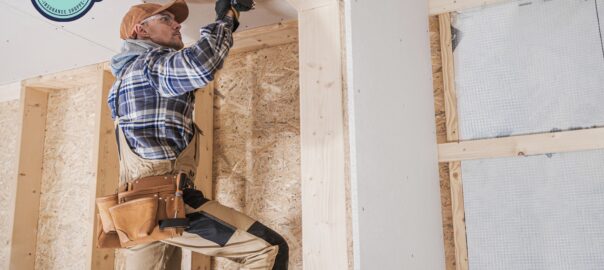
For most contractors, tools and equipment are the business – and they’re also the single most common source of claims. Theft of tools, whether from a job site or out of a commercial vehicle, is the claim agents see more than any other. That makes getting your tool coverage right a priority, not an afterthought. Contractor tool and equipment insurance is important for any contractor to have.
Because theft drives so many claims, it’s worth treating tool coverage as carefully as you would your liability. Tools disappear from open job sites, from locked trucks parked overnight, and from storage during a project’s downtime – and replacing a full kit out of pocket can stall the work and eat into a job’s margin. The goal is to know, before anything goes missing, exactly how your policy responds.
Is Theft of Tools Actually Covered?
Usually, but not automatically. You have to make sure theft is included, and ideally that you carry comprehensive coverage for your tools and equipment. Theft can be excluded in certain situations or areas, so the safe move is to read your policy carefully or talk to your agent and confirm in writing that theft is covered. Never assume it’s there by default.
Tools Left at a Job Site
Tools left at a job site can be covered, but only if they’re scheduled onto your policy and the coverage applies both on-premise and off-premise. The exact wording matters: carriers differ in how they describe whose tools are covered, and the items generally need to be owned by the contractor (and sometimes by the contractor’s employees). Confirm the language so there’s no question when a claim arises.
Borrowed vs. Rented Equipment
There’s a meaningful difference between borrowing and renting, and insurers strongly prefer the latter. Rented equipment comes with a clear contract – which piece, from which company, for which dates, at which cost. That clarity makes coverage straightforward.
Borrowed equipment, typically from another contractor, is a gray area, and insurers dislike gray areas. Without a contract, it becomes unclear whose policy responds: yours, or the owner’s? Many carriers don’t want you borrowing equipment at all, precisely because of that ambiguity.
How Much Tool Coverage Should You Carry?
As a baseline, carry enough to cover the value of what you actually own. There are two main ways to insure tools, and many contractors use a combination of both.
A blanket rider provides a single blanketed amount for non-mobile tools — think of anything that fits in a toolbox, such as hammers, wrenches, and smaller hand tools, along with items like ladders. A scheduled form, by contrast, itemizes each piece: you provide a list (a spreadsheet works well) showing how many of each item you own and the value of each one.
Mobile vs. Non-Mobile Equipment
The mobile-versus-non-mobile distinction drives how items get scheduled. Anything on wheels is treated separately from miscellaneous hand tools because it’s typically more expensive and carries serial numbers. These mobile items — forklifts, excavators, lawnmowers, backpack blowers, and similar gear – should almost always be scheduled individually, since a standard policy gives little or no coverage for them otherwise.
Keep an Inventory
The single best habit is maintaining a current inventory. An itemized spreadsheet listing your tools and their values makes scheduling far easier and removes guesswork at claim time. It’s harder to track every small hand tool, which is where a blanket rider helps — but for larger and mobile equipment, an up-to-date list is the surest way to know you’re fully protected. Update it as you buy and retire gear, note serial numbers for anything that has them, and review the values with your agent at renewal so your limits keep pace with what you actually own.
This article is general information and not specific insurance, legal, or financial advice. Coverage terms and exclusions vary by carrier — confirm what applies to your tools and equipment with The Boro Insurance Shoppe.