Archives

Pennsylvania no-fault state insurance

What Pennsylvania’s No-Fault State Insurance Law Really Means for You

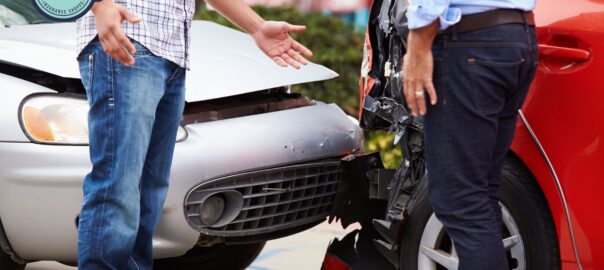
Pennsylvania is known as a no-fault state, but the term confuses almost everyone, and understandably so. “No-fault” doesn’t mean nobody is responsible for an accident. It mostly refers to how your medical coverage works after a crash. Here’s what it actually means for your auto policy and your protection.

Is Pennsylvania a No-Fault State?

Yes. Pennsylvania is considered a no-fault state, which means that when it comes to medical bills from a car accident, you turn to your own insurance policy first – regardless of who caused the crash. Your auto policy includes first-party medical benefits that cover you for injuries from a car accident, and those benefits come back to your own carrier.

What Are First-Party Medical Benefits?

First-party medical benefits are the portion of your Pennsylvania auto policy that pays your medical costs after an accident. The state minimum is $5,000, and it applies per person, per accident. Importantly, this coverage protects you whether you are a driver, a passenger, or even a pedestrian.

That last part surprises people the most. If you are walking across the street and a car hits you, you notify your own insurance carrier for your medical bills. It sounds backwards – someone else hit you, and it was their fault, but because Pennsylvania is a no-fault state, your personal injury and medical claims go back to your own policy first.

How Does No-Fault Connect to Your Tort Option?

Your injuries tie directly back to your tort selection. Whether you choose full tort or limited tort, and how serious your injuries are, determine whether you can sue the other driver for pain and suffering. So your medical benefits and your right to recover for injuries are linked: the no-fault medical coverage handles your bills, while your tort option governs your ability to sue beyond that.

What Is Bodily Injury and Property Damage Coverage?

Two other coverages on your policy protect the other driver, not you: bodily injury and property damage liability. If you cause an accident, these pay for the other party’s injuries and damaged property. They are essential, but it’s important to understand that they exist to protect others, which is exactly why you also need coverage that protects you.

Why Do You Need Uninsured and Underinsured Motorist Coverage?

Uninsured and underinsured motorist coverage, often called UM/UIM, is the coverage that protects you when the at-fault driver either has no insurance at all or carries only minimal limits. This is one of the most important and most overlooked parts of a Pennsylvania auto policy.

Consider the math. Suppose you are seriously injured and your injuries total hundreds of thousands of dollars, but the driver who hit you carries only the state minimum of $15,000 in coverage. Where does the rest of your money come from? It comes from your own uninsured and underinsured motorist coverage. In effect, you turn to your own policy to make yourself whole. That is another reason Pennsylvania is described as a no-fault state – again and again, you go back to your own policy to collect.

How Should Pennsylvania Drivers Set Up Their Coverage?

A well-built Pennsylvania auto policy balances several pieces working together:

  • First-party medical benefits – at least the $5,000 state minimum, often more, to cover your medical bills regardless of fault.
  • A tort option (full or limited) that matches your willingness to pay for the right to sue.
  • Bodily injury and property damage liability – to protect the other driver if you’re at fault.
  • Uninsured and underinsured motorist coverage – to protect you when the other driver has little or no insurance.

Because every driver’s situation, budget, and risk tolerance are different, there is no single correct set of limits. The right approach is to review each coverage with an agent who will explain how the pieces fit together rather than simply selling you state minimums.

Want a clear explanation of your own coverage and where your gaps might be? Get in touch with the Boro Insurance Shoppe

classic car insurance Pennsylvania

Classic Car Insurance: Why a Specialty Policy Beats a Standard Auto Policy

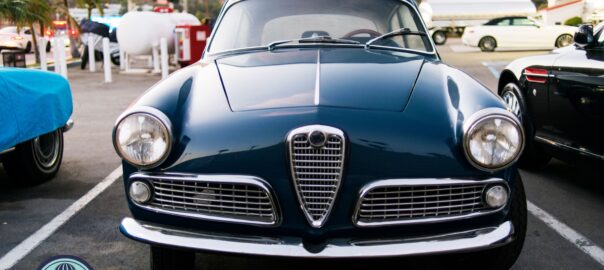
If you own a classic, antique, or collector vehicle, insuring it on your everyday auto policy can be a costly mistake. A specialty classic car policy not only tends to cost less – it can also pay you far more if something happens. Here’s how classic car insurance differs from a standard auto policy and why it matters for Pennsylvania collectors.

How Is Classic Car Insurance Different From a Regular Auto Policy?

Because a specialty carrier focuses only on this type of vehicle, you typically get a lower rate and a better premium than you would on a standard policy. Even more important, you can value your vehicle the way it deserves to be valued, rather than being stuck with whatever a standard insurer’s system says it’s worth today.

What Is Stated Value (Agreed Value) Coverage?

The biggest advantage of a classic policy is how the value is set. Say you have a 1969 Chevrolet Corvette you bought for $10,000 to $15,000 and you’re in the process of restoring it. Once finished, it may be worth $30,000 to $40,000. On a standard auto policy, the insurer will usually only give you the value of what the car is today, unless they specifically offer classic capability.

With a specialty carrier, you can use what’s called a stated amount. You tell them you’re restoring the car, what you want it insured for, and they require an appraisal. They’ll ask what specifically you’re doing to bring it to that value, and together you arrive at an agreed stated value. That means you can insure the car for what it truly will be worth once completed, or, if it’s already finished, for its full value – knowing you’ll receive that full amount if there’s a total loss.

What Is Actual Cash Value and Why Does It Hurt Classic Owners?

A standard auto policy pays actual cash value, which is essentially what it would cost to replace the vehicle minus depreciation. The insurer looks at the condition of the car, the tires, the interior, the mileage, and more, then depreciates the value accordingly. For a lovingly restored classic, that can mean a payout far below what the car is genuinely worth, because it’s being valued like a regular used vehicle. Stated value avoids that problem entirely.

What Is Cherished Salvage Coverage?

Many specialty carriers also offer something called cherished salvage. If your classic is totaled, you can actually keep the vehicle and still collect your settlement. A salvage title is issued to you, but you retain the car, so you get both the payout and the vehicle itself. From there, you can restore it and begin the process again.

This is a meaningful difference from standard insurance. With a typical auto policy, once a vehicle is totaled, you usually have to turn it over to the insurance company and cannot keep it. For a collector who has poured time into a build, the ability to retain the car is invaluable.

Does Business Use Affect Classic Car Coverage?

Yes, and it’s critical to disclose. If you use your classic for any business purpose – for example, renting it out to a movie set, that’s considered business use and must be disclosed to the carrier. There may be stipulations on allowing the vehicle for business use, and failing to disclose it can jeopardize a claim. Cherished salvage and stated-value benefits apply cleanly when the vehicle is used for personal enjoyment, such as a Sunday drive, and properly disclosed otherwise.

How Should You Insure a Classic or Collector Car?

The takeaway is simple: a classic vehicle generally belongs on a specialty or niche policy, not lumped onto your standard auto coverage. To set it up correctly:

  • Use a specialty carrier that offers stated or agreed value
  • Be ready to provide an appraisal and details of your restoration
  • Confirm whether cherished salvage is available so you can keep a totaled car
  • Disclose any business use up front to avoid coverage problems

Restoring or already enjoying a classic? Call The Boro Insurance Shoppe at 215-750-1030 and we’ll match your vehicle with a specialty policy that values it properly.